
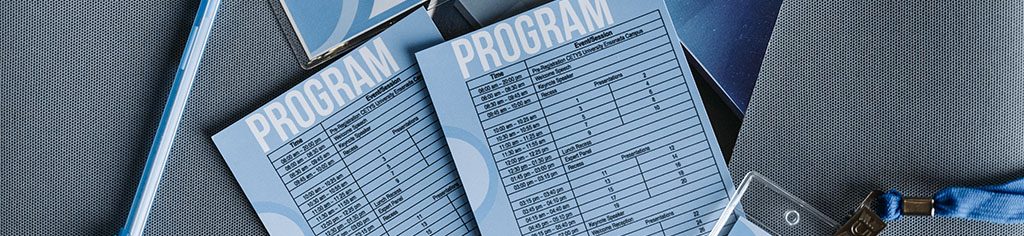
2026 Program
On-Demand sessions are pre-recorded and all others will stream live except for the ISOGG meeting on Sunday morning.
All sessions will be accessible to conference attendees to watch and rewatch on the vFairs platform starting about 1 week after the Conference through December 31st.
The contents below may be subject to minor changes or corrections.
Day/Time | Session Description |
|---|---|
Friday | |
10:15am | Guided Tour of the Brim-DeForest Library at American Ancestors Discover the Brim-DeForest Library, a leading center for genealogical research and scholarship. During this tour, your group will learn about the library’s archives, services, and research tools, gaining insight into how family history and historical documents are preserved and explored. This tour is an ideal starting point for groups planning to spend additional time conducting research. |
11:00am | Tour of Brim-Deforest Library Research at American Ancestors Spend time exploring your own family history in the Brim-DeForest Library. With access to millions of genealogical records and resources, your group can begin to uncover personal connections to the past. Library staff are available to assist with general questions as you navigate the collections. We recommend allowing at least 3–6 hours to make the most of your research experience. |
10:00am - 6:00pm | Visit American Ancestors anytime No registration needed if you would like to go to the American Ancestors and browse around. You can come and go as you would like. This includes access to both the Brim-DeForest Library and the Family Heritage Experience. They are open: 10:00am - 6:00pm Tuesday through Saturday. Check out their website for the resources they have available! |
1:00pm | Registration Opens (Outside Mystic Room) |
2:30pm - 3:00pm | Vfairs ON-DEMAND |
3:00pm - 4:00pm | I Did Everything Right. So Where's My Ancestor? You followed the plan. You built your network. You used Shared Matches of Matches. You did the genealogy. And yet you have a cluster of matches that seems to belong together — and still no ancestor to show for it. In this session, Diahan introduces the concept of the daisy chain: a subtle methodological trap that catches even experienced researchers, quietly pulling them further and further from their original anchor without ever feeling like a wrong turn. If you've ever done everything right and still come up empty, this one's for you. |
4:00pm - 5:00pm | Turning a Brick Wall into a Community: Using Documents and DNA Together A single record can feel like a dead end—or it can open the door to an entire world. Beginning with a militia record for Isaac Cloud, my brick wall patrilineal ancestor, this session shows how I used one document to uncover the intersection of several family lines while reconstructing the community in Spring Place, Georgia between 1820 and 1840. By placing individuals within their historical and geographic context, we can move beyond isolated ancestors to understand how families, neighbors, and communities were connected across cultural lines—and how those non-matching surnames may have entered our Y-DNA results. This presentation follows the process of tracing documentary evidence, expanding to associated families, and using that network to form testable hypotheses. It also demonstrates how DNA can be used not just for analysis, but to identify and recruit targeted testers to confirm—or challenge—those hypotheses. Along the way, we will examine how to evaluate conflicting evidence, how new information can shift conclusions, and why unexpected DNA results are still meaningful. You’ll leave with a practical framework for breaking through brick walls by reconstructing the world your ancestors lived in—using records, DNA, and historical context to build stronger conclusions. |
7:00pm | Official Welcome followed by: Keynote - The AI Frontier in Genetic Genealogy: Where We Are and Where We're Going · Steve Little and Mark Thompson |
Saturday | |
7:00am | Registration (Outside Mystic Room) |
9:00am - 9:50am | Keynote: It Takes a Village Collaborating cousins, DNA testers, and surname project administrators used Y-DNA and autosomal DNA to identify the parents of an English-born Irish immigrant to New England. |
9:50am - 10:05am | Break |
10:05am - 10:55am | Session A - DNA and DAR DNA and the Daughters of the American Revolution. |
10:05am - 10:55am | Session A - Understanding Your DNA Health Reports Learn to read your health report from 23andMe or Promethease and analyze magnitude, position, and frequency. A “tendency toward” is not a “diagnosis of.” |
10:05am - 10:55am | Session A - Understanding the What are the Odds tool as DNA Painter ON-DEMAND |
10:55am - 11:10am | Break |
11:10am - 12:00pm | Session B - There's Always a Next Step You followed the plan. You did everything you were supposed to do. But your results don't look like the examples, or you've hit a wall that nobody warned you about, and now you're wondering if you did something wrong. You didn't. DNA research rarely goes exactly as planned — and that's not a failure, that's just the reality of working with real data and real families. In this session, Diahan walks through the four key stages of the DNA research plan and the strategies available to you at each one, so that no matter what your results look like, you always know there's a next step. Leave with a comprehensive reference you'll return to every time your research stalls. |
11:10am - 12:00pm | Session B - Using DNA to Identify Ancestral Origins Ethnicity estimates are just a small part of your DNA results. They aren’t always accurate or as precise as you’d like them to be. This class will discuss how to triangulate ancestral origins by reviewing your matches carefully and by combing your DNA results with traditional genealogical research. |
11:10am - 12:00pm | Session B - Common Ancestors at DNAGedcom - Building Trees ON-DEMAND How do you find Common Ancestors through your DNA? Whats happening with GWorks? Come find out the latest and greatest on Trees and DNAGedcom. |
12:00pm - 1:30pm | Lunch Break |
1:30pm - 2:20pm | Session C - Navigating Your Jewish DNA Results Learn all about Jewish genetic genealogy! Topics include ethnicity estimates, tools to analyze DNA matches, nuances at each testing company, and strategies to tackle endogamy. |
1:30pm - 2:20pm | Session C - Your DNA Toolkit: Expanding Your Research with Third-Party Tools A survey of the six categories of third-party DNA tools — from comparison and clustering to organizing and extraction — expanding your research beyond the testing companies. |
1:30pm - 2:20pm | Session C - MyHeritage DNA Basic Level ON-DEMAND |
2:20pm - 2:35pm | Break |
2:35pm - 3:25pm | Session D - When the Story Isn't True: DNA and the Family Legend Problem Every family has a story everyone believes. DNA has a way of dismantling them. Drawing from her forthcoming book, Kate examines what happens when genetic evidence contradicts cherished family narratives and how researchers navigate what comes next. |
2:35pm - 3:25pm | Session D - Mitochondrial DNA-Z: My Results are Back, Now What? Would you like to learn how to optimize your mitochondrial DNA results for genealogy? What do those numbers mean, and why are they important? This is just the class for you. We will take results, step-by-step through all of the reports and tools, including Discover, to help you interpret your results and how to use them for genealogy. Which brick walls are waiting to fall? |
2:35pm - 3:25pm | Session D - The Power of DNA - Making Life-Changing Connections ON-DEMAND What happens when DNA reveals long-hidden secrets? Follow an adoptee’s emotional journey as he uses genetic testing to identify his birth parents and trace his German roots. Armed with a DNA kit and determination, he uncovers life-changing truths—and forges powerful new family connections. |
3:45pm - 6:00pm | Visit the Vendors in the virtual EX Hall & Hotel |
6:00pm - 8:00pm | DNA Academy · Mags Gaulden (Host), Dave Vance, Roberta Estes, Rob Warthen, Katherine Borges, Jennifer Zinck Join Mags Gaulden, Dave Vance, Roberta Estes, Rob Warthen, Katherine Borges and Jennifer Zinck for a Q & A panel with special guests to start, then sit back and enjoy a presentation on NGS testing for autosomal DNA, by Dave Vance, and "Using Ancient Connections to Unlock Genealogy", by Roberta Estes. |
Sunday | |
8:00am - 8:45am | ISOGG Meeting |
9:00am - 9:50am | Keynote: Mining A Chromosome 22 Pile-Up: Clustering Through a Documented Colonial Lineage How I tamed a crowded chromosome 22 match list: a systematic approach to tracing the origin of a segment and identifying relationships between matches. |
9:50am - 10:05am | Break |
10:05am - 10:55am | Session E - Unleash the Power of DNA Testing family members improves genetic genealogy results. Learn how testing parents, siblings, and other relatives increases genetic coverage, assigns DNA to ancestors, and solves problems. |
10:05am - 10:55am | Session E - Step Up to the Plate: Winning Strategies for Connecting with Your DNA Matches Master outreach preparation, messaging strategies, and follow-up techniques with DNA matches — because like baseball, a .300 batting average is an All Star Performance. |
10:05am - 10:55am | Session E - Our Genetic Explorer's Journey ON-DEMAND Swim, hunt, and fish in multiple lakes. In family history/genetic discovery terms, this means using all of the current major DNA testing companies in order to best achieve your research goals. Chromosome segment data can play significant roles in finding more of your family. Today we will show you how. |
10:55am - 11:10am | Break |
11:10am - 12:00pm | Session F - The DNA of a Revolution We will also look at some revolutionary genetics work being done through DNA Group Projects and battlefield excavations to help confirm and identify the DNA of the American Revolution. A look at some of the men and women who fought to make America Free. |
11:10am - 12:00pm | Session F - Finding an Ohio Pioneer Family Using Mitochondrial DNA Learn tips on how to use mitochondrial DNA to trace your matrilineal line—and you might even discover a pioneer in Ohio. |
11:10am - 12:00pm | Session F - Unraveling the Identity of Arthur Burton ON-DEMAND After reconnecting with her unknown paternal family, Dawn was told that her father's paternal grandfather, Arthur Burton, was born in Chatham, Ontario, Canada to Arthur and Fannie Burton, and that he had a twin brother named Fred. Family lore further suggested that as a young child, Arthur had been given up for adoption to a Michigan family... allegedly in exchange for a gas stove. Through application of genetic genealogy methods, Dawn was able to separate fact from fiction, ultimately discovering the truth of Arthur's origins. Later, collaborative research with a third cousin twice removed led to the identification of a full sibling, along with evidence the brothers had met each other. Further research revealed their biological father's identity, including a surprise 18th century UK scandal in the process. This case study traces three distinct research threads that together unraveled the true identity of Dawn's great-grandfather. |
12:00pm - 1:30pm | Visit the Vendors in the virtual EX Hall & Hotel |
1:30pm - 2:20pm | Session G - Solving a Paternity Puzzle: AI-Assisted Match List Analysis in Endogamous Appalachia An introduction to AI and genealogy using a case study from my own Ashe County, NC research |
1:30pm - 2:20pm | Session G - Between the Records and the Results: Tracing Ancestors in Mixed Lines · Roberta Estes and Janine Cloud Researchers often set out to find Native American ancestry because of family lore or a photo that suggests Native heritage. They soon find it difficult to identify—much less document—those connections, especially in mixed lines where records and DNA don’t always align with those stories. This session moves beyond the basics of haplogroups and ancestry informative markers to focus on how to apply them in real research—whether that leads to confirming those connections or ruling them out. Through complementary case studies, we demonstrate how DNA and documentary research work together to identify the families behind those results. One approach uses autosomal DNA analysis, clustering, and targeted testing to identify and confirm Native ancestry. The other follows a document-driven path, using non-Native ancestors, historical context, and community reconstruction to identify the families connected to those DNA signals when direct evidence is unclear or missing. You’ll leave with practical, repeatable strategies for tracing Native ancestors in mixed lines by connecting DNA evidence to the broader family networks that produced it. |
1:30pm - 2:20pm | Session G - MyHeritageDNA Advanced Level ON-DEMAND |
2:20pm - 2:35pm | Break |
2:35pm - 3:25pm | Session H - Gerald Hawley and the Silence: What Erased Ancestors Teach Us About DNA Research Some ancestors disappear not because records failed but because families chose to forget. Drawing from the introduction to her forthcoming book, Kate explores how grief, shame, and silence shape the DNA evidence we find, and what we owe the forgotten. |
2:35pm - 3:25pm | Session H - Introduction to DNA Painter: Strategies to Enhance Your Genealogical Research An overview of the various tools available at DNA Painter, including the Shared cM Project, What Are the Odds (WATO), ancestral trees, and chromosome mapping. |
2:35pm - 3:25pm | Session H - Applied Artificial Intelligence for Genetic Genealogists ON-DEMAND AI can deliver reliable results for genetic genealogists today. This session walks through the current AI use cases that work, and where AI still falls short. |
3:35pm - 4:00pm | Closing ECGGC Committee & mitoYDNA board |